
Check the procedure using the checklist and instructions for a specific model, and resolve questions about the accuracy of the device through comparison and service.
Main idea
Comparability is more important than excessive frequency. The same posture, the same time and careful recording of conditions help to distinguish a stable trend from a random fluctuation.
Most everyday mistakes are not related to the breakdown of the device, but to haste, conversation, cuff, posture and selective saving of results. First practical guide for this task: inspect the cuff and device power supply.
Action plan
- 01
Inspect the cuff and device power supply.
- 02
Check your procedure with the manufacturer's manual.
- 03
Carry out several scheduled measurements without changing conditions.
- 04
Take the device to your appointment if the doctor suggests a comparison.
What most often distorts observation?
- Test the device on another person and consider the difference a malfunction.
- Use a damaged or incorrect cuff.
- Calibrate the device yourself without the manufacturer's procedure.
How does this relate to Vesometr
Vesometr is only responsible for the log and does not check the tonometer; information about device changes should be kept in notes.
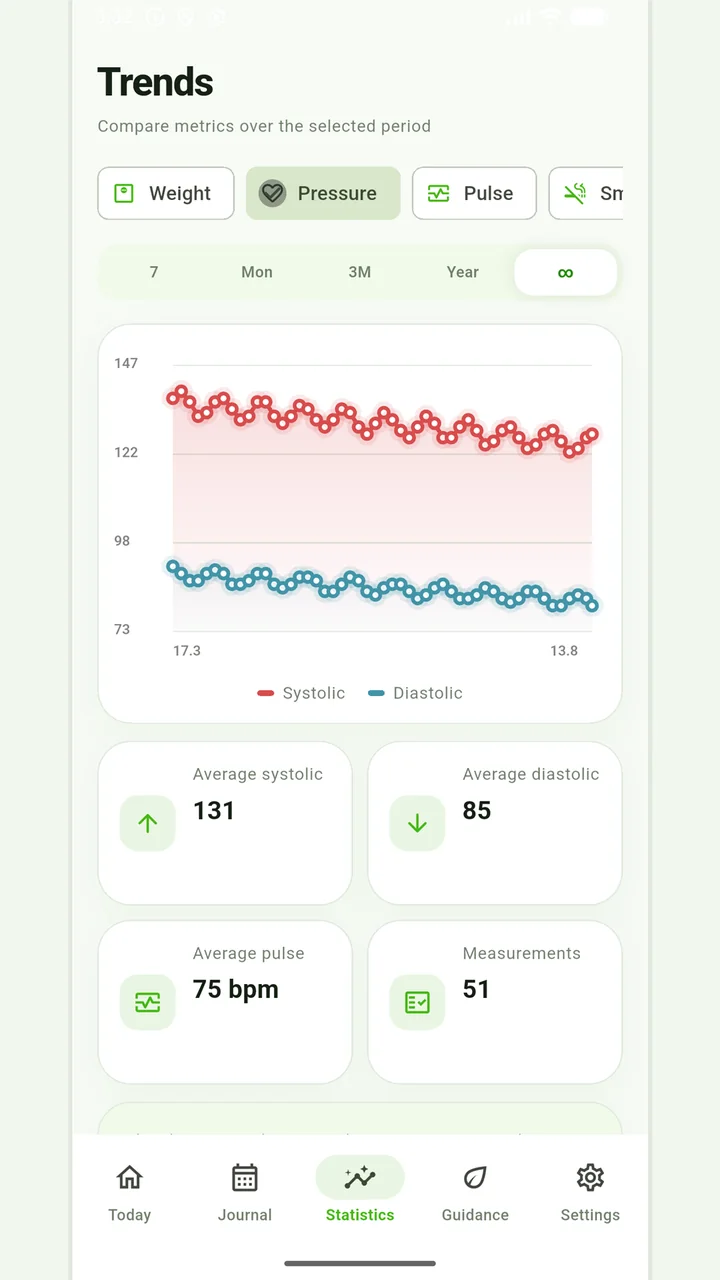
Blood pressure and pulse
Measurements, wellbeing and the circumstances of each reading in one entry.
What to review later
Home measurement is only useful if the procedure is clear: a few minutes of rest, a suitable cuff, support for the back and arms, no talking while the tonometer is working.
For a final review, go back to the last step: take the device to your appointment if the doctor suggests a comparison. Compare it to the original target and specifically note exceptions that cannot be explained by the available records.
Vesometr does not assess the risk of indications and does not prescribe treatment. If there is a sharp deterioration in health, chest pain, severe shortness of breath, speech impairment, weakness in a limb or other acute symptom, urgent medical attention is needed, and not an entry in the application.
Full medical disclaimerBrief conclusion
Most everyday mistakes are not related to the breakdown of the device, but to haste, conversation, cuff, posture and selective saving of results. Working minimum to continue: inspect the cuff and device power supply. After this, use the remaining points as a testable plan and keep only actual observations.