
Analysis is needed for the next decision, not for moral assessment; If you experience repeated breakdowns, you should seek professional support.
What matters
Decline or failure rarely follows a straight line. A neutral record of a breakdown is more useful than self-blame: it preserves context and helps you adjust the next step.
One episode does not erase the previous experience, but it is useful to record exactly what happened before, during and after it. First practical guide for this task: write down the time and situation as soon as possible.
How to organize observation
- 01
Write down the time and situation as soon as possible.
- 02
Note the intensity of cravings and the availability of cigarettes.
- 03
Describe what would help in a similar case.
- 04
Return to the next planned step or contact a specialist.
What most often distorts observation?
- Delete previous zero days.
- Compensate for the episode with dangerous restrictions.
- Refusing help out of shame.
How does this relate to Vesometr
The history of Vesometr saves both days without smoking and recurrent episodes, so the dynamics are not reduced to one episode.
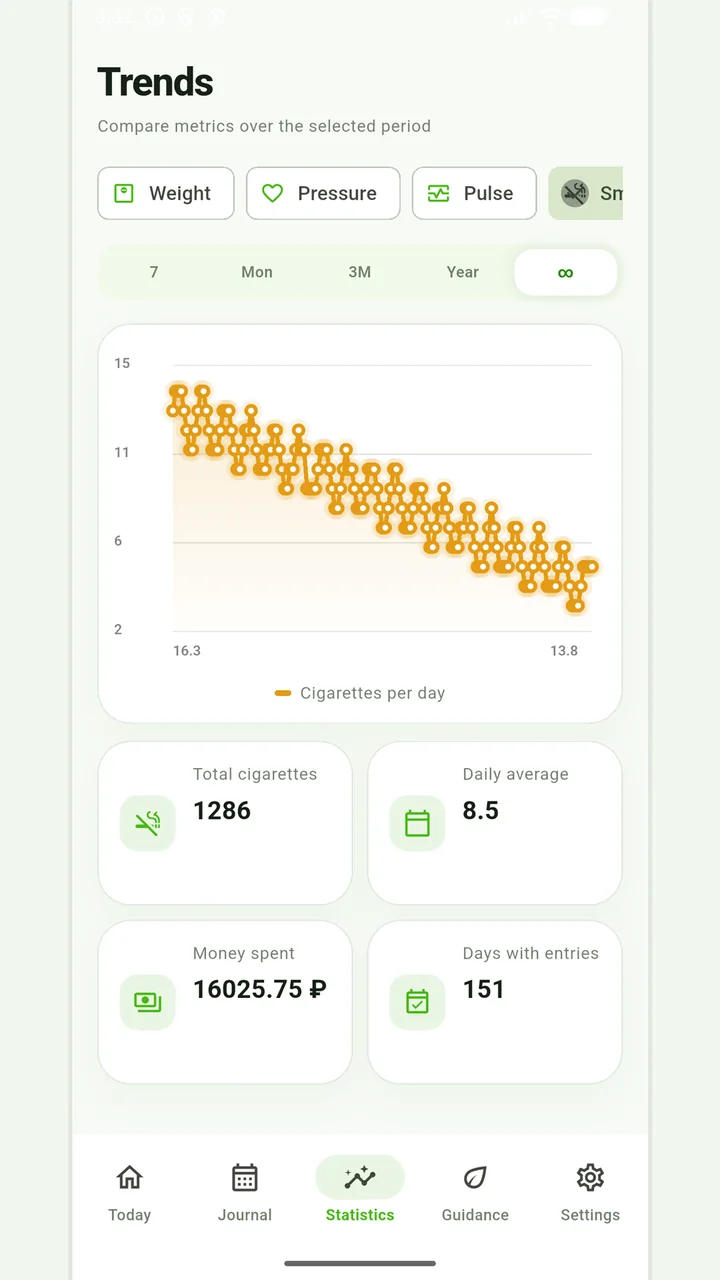
Habit journal
Quantity, historical pack price, expenses and trends across periods.
A conclusion without rushing
The Habit Diary is valuable for its honesty, not its perfect line. The number, timing, and situation around an episode help you see recurring triggers and automatic scripts.
For a final review, go back to the last step: return to the next planned step or contact a specialist. Compare it to the original target and specifically note exceptions that cannot be explained by the available records.
The materials do not replace medical care for nicotine addiction. If changing a habit on your own is difficult, discuss evidence-based support with a specialist.
Full medical disclaimerBrief conclusion
One episode does not erase the previous experience, but it is useful to record exactly what happened before, during and after it. Working minimum to continue: write down the time and situation as soon as possible. After this, use the remaining points as a testable plan and keep only actual observations.