
To evaluate the training period, use separate, comparable control measurements, and do not mix one-time tests around the load with the main series.
What matters
The purpose of a weight log is to make observation calm and repeatable. The recording should help to notice a stable trend and prepare questions for a specialist, and not push for sharp restrictions.
The difference immediately before and after exercise primarily reflects short-term changes in fluid and conditions rather than the result of the training program. First practical guide for this task: determine why you need to measure before and after training.
How to organize observation
- 01
Determine why you need to measure before and after training.
- 02
Record the time, duration of exercise and fluid intake.
- 03
Do not replace the morning control series with post-workout values.
- 04
Evaluate the program over a longer period and across multiple metrics.
What most often distorts observation?
- Mistake short-term reductions for fat loss.
- Limit fluid recovery for the sake of numbers.
- Compare different types of load without context.
How does this relate to Vesometr
If you add such a value to Vesometr, make sure to explain the terms in a diary note to avoid confusing it with a regular measurement later.
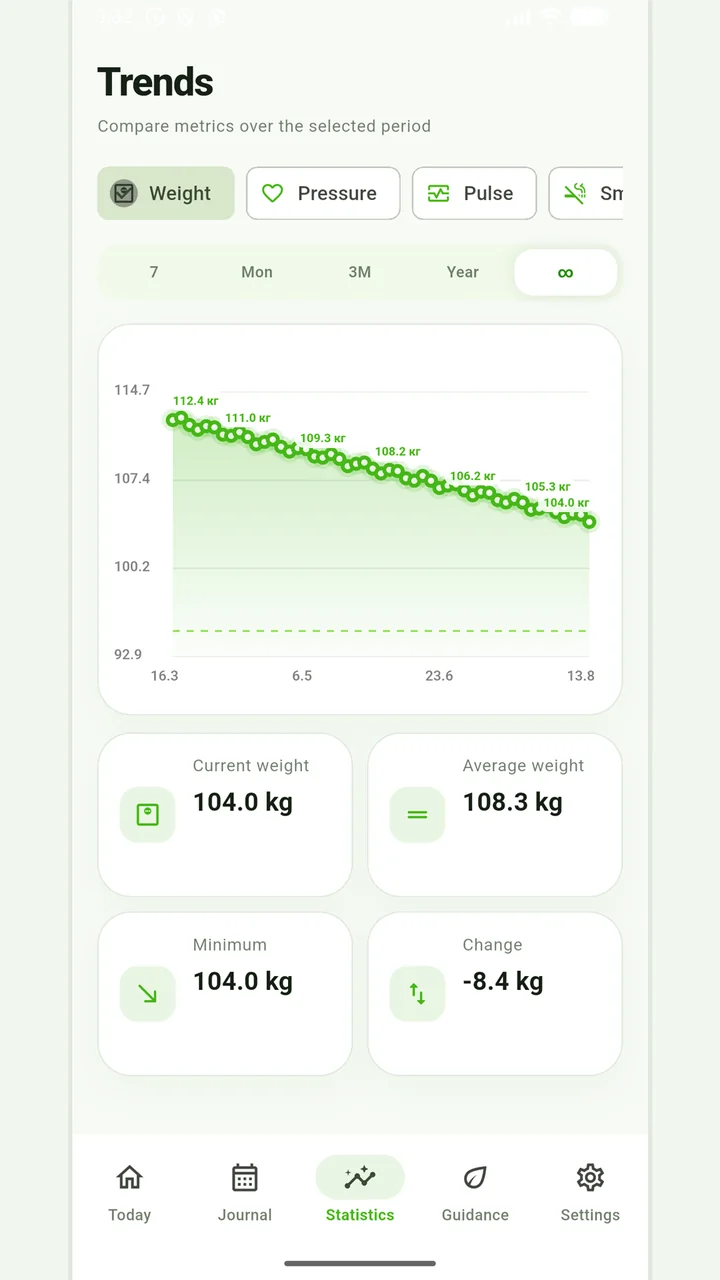
Weight trends
Charts, a target and period comparisons without judging progress by one number.
A conclusion without rushing
One number on the scale says almost nothing about the direction of change. It is more useful to have the same measurement conditions, understandable frequency of recordings and monitoring the line over several days or weeks.
For a final review, go back to the last step: evaluate the program over a longer period and across multiple metrics. Compare it to the original target and specifically note exceptions that cannot be explained by the available records.
Don't use weight changes as the only way to assess your health. Unexplained rapid weight changes, severe swelling, weakness or other worrying symptoms should be discussed with your doctor.
Full medical disclaimerBrief conclusion
The difference immediately before and after exercise primarily reflects short-term changes in fluid and conditions rather than the result of the training program. Working minimum to continue: determine why you need to measure before and after training. After this, use the remaining points as a testable plan and keep only actual observations.