
Do a quick check for test values, duplicates, equipment changes, and abbreviations that only you understand.
What matters
A good report saves time on reconstructing the chronology. Dates, measurements, medications, and notes are visible, but only the user and physician determine what is clinically important.
Quality is determined not by the number of lines, but by clear units, comparable terms, honest omissions, and clear notes. First practical guide for this task: view cutoffs and associated dates.
How to organize observation
- 01
View cutoffs and associated dates.
- 02
Check the units and time format.
- 03
Note the change in blood pressure monitor, scales or mode.
- 04
Decipher personal abbreviations in your resume.
What most often distorts observation?
- Fill in the blanks from memory.
- Remove outlier without explanation.
- Leave an inaccurate dosage of medication.
How does this relate to Vesometr
Vesometr Calendar allows you to correct and remove obvious errors before creating a new PDF.
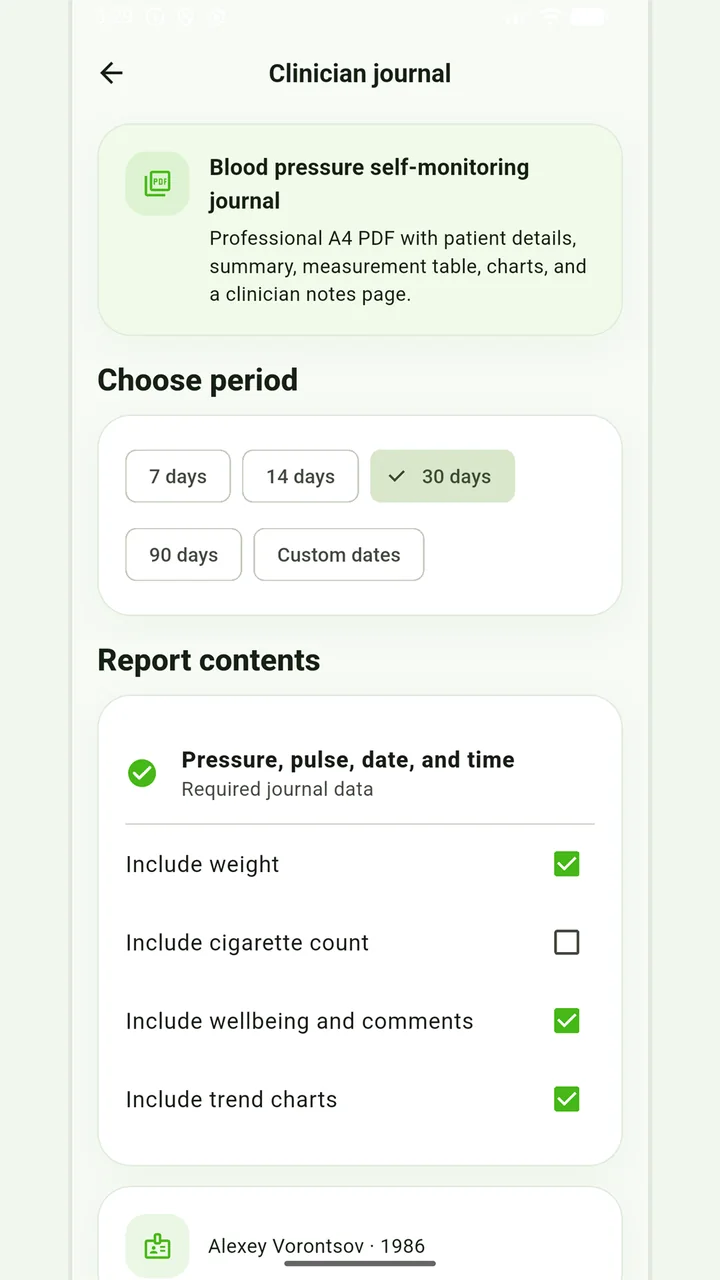
PDF for a consultation
Choose the period and journal sections before sharing a report with a professional.
A conclusion without rushing
Before consultation, it is useful to select a limited period, check the units and note the mode changes. Too long an unloading without emphasis can hide the main issue.
For a final review, go back to the last step: decipher personal abbreviations in your resume. Compare it to the original target and specifically note exceptions that cannot be explained by the available records.
Don’t put off applying in order to accumulate the perfect report. If it is an emergency, report symptoms and follow directions from your healthcare provider; the diary can be shown later.
Full medical disclaimerBrief conclusion
Quality is determined not by the number of lines, but by clear units, comparable terms, honest omissions, and clear notes. Working minimum to continue: view cutoffs and associated dates. After this, use the remaining points as a testable plan and keep only actual observations.