
Describe several reference values in words and apply them equally, adding brief context only when necessary.
Main idea
Assessing your well-being is subjective, and that’s normal. Benefit occurs when a person uses the same scale and marks circumstances in the same way.
The scale is needed to compare your own days, and not to make a psychological diagnosis or comparison with other people. First practical guide for this task: select a range of five or ten points.
Action plan
- 01
Select a range of five or ten points.
- 02
Determine what low, medium, and high mean to you.
- 03
Fill at approximately the same time.
- 04
Look at your distribution once a month, not just the minimum.
What most often distorts observation?
- Change the scale depending on expectations.
- Consider an individual low score as a diagnosis.
- Ignore a long-term serious condition without seeking help.
How does this relate to Vesometr
Mood scores can be included in Vesometr's well-being record and correlated with a calendar without remote analysis.
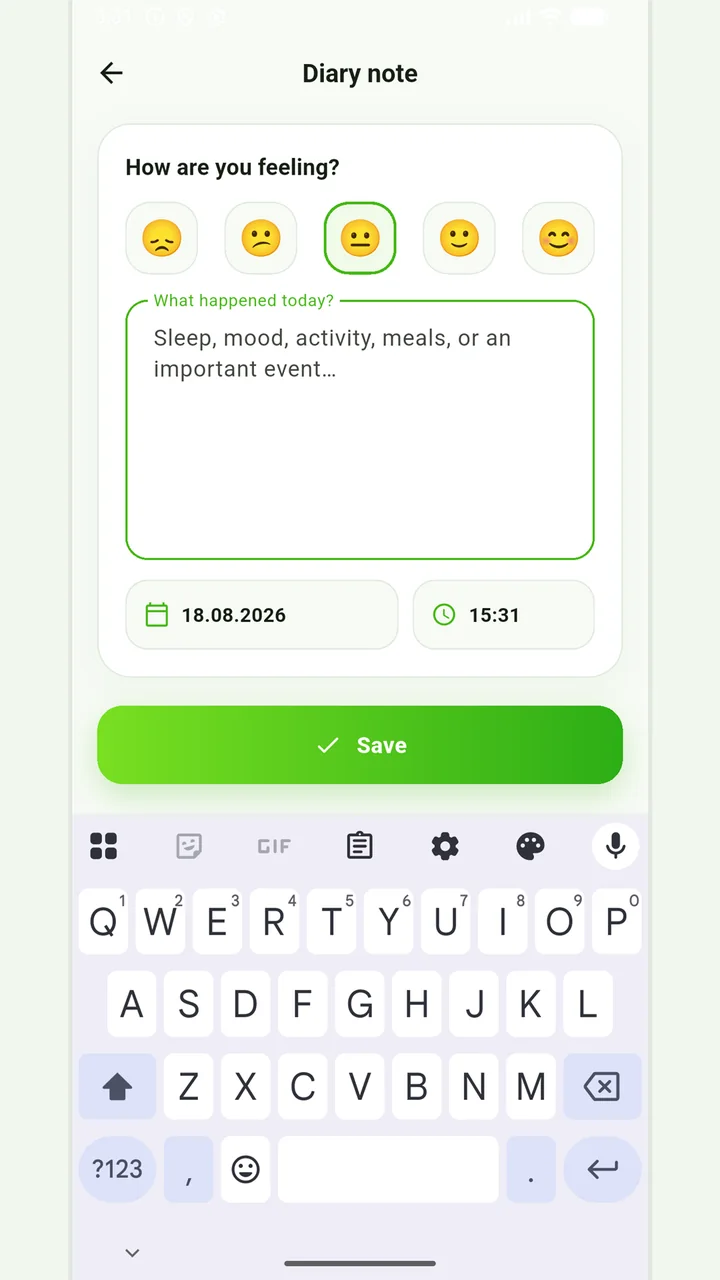
Wellbeing and notes
Mood, a personal rating and free-text context for the selected day.
What to review later
The coincidence of two events in time does not mean that one caused the other. The diary helps to see repeatability and prepare a hypothesis, but does not replace diagnostics.
For a final review, go back to the last step: look at your distribution once a month, not just the minimum. Compare it to the original target and specifically note exceptions that cannot be explained by the available records.
The article and appendix do not determine the cause of symptoms. If your illness is severe, unusual, or worsening, seek medical attention regardless of your diary entries.
Full medical disclaimerBrief conclusion
The scale is needed to compare your own days, and not to make a psychological diagnosis or comparison with other people. Working minimum to continue: select a range of five or ten points. After this, use the remaining points as a testable plan and keep only actual observations.