
Select the period associated with the consultation question, check the units, and note the onset of symptoms, regimen changes, or prescriptions.
A practical approach
The purpose of a weight log is to make observation calm and repeatable. The recording should help to notice a stable trend and prepare questions for a specialist, and not push for sharp restrictions.
The clinician will benefit from a condensed sequence of comparable measurements and brief context rather than a long list of numbers without dates or terms. First practical guide for this task: formulate one main question for the consultation.
Four consecutive steps
- 01
Formulate one main question for the consultation.
- 02
Select the relevant period and remove random test records.
- 03
Check dates, meanings and explanatory notes.
- 04
Generate a PDF and review it before submitting.
What most often distorts observation?
- Transfer the entire archive without checking sensitive notes.
- Edit inconvenient values for a beautiful line.
- Consider the report as a substitute for a description of how you feel.
How does this relate to Vesometr
Vesometr generates a PDF self-monitoring log from user-selected data; the document remains a user report, not a medical record.
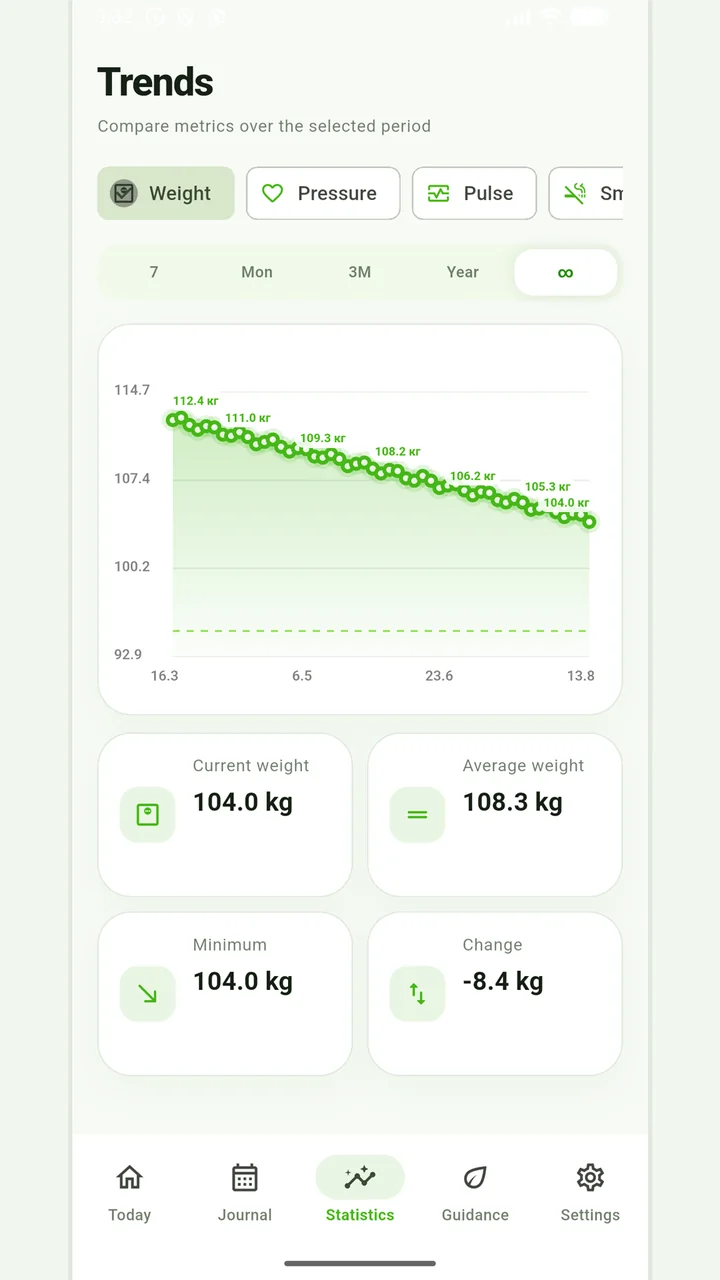
Weight trends
Charts, a target and period comparisons without judging progress by one number.
How to use the collected data
One number on the scale says almost nothing about the direction of change. It is more useful to have the same measurement conditions, understandable frequency of recordings and monitoring the line over several days or weeks.
For a final review, go back to the last step: generate a pdf and review it before submitting. Compare it to the original target and specifically note exceptions that cannot be explained by the available records.
Don't use weight changes as the only way to assess your health. Unexplained rapid weight changes, severe swelling, weakness or other worrying symptoms should be discussed with your doctor.
Full medical disclaimerBrief conclusion
The clinician will benefit from a condensed sequence of comparable measurements and brief context rather than a long list of numbers without dates or terms. Working minimum to continue: formulate one main question for the consultation. After this, use the remaining points as a testable plan and keep only actual observations.