
Look at repetition, exceptions and data quality rather than trying to explain everything with one cause.
What matters
The coincidence of two events in time does not mean that one caused the other. The diary helps to see repeatability and prepare a hypothesis, but does not replace diagnostics.
A short review turns accumulated records into one actionable conclusion and helps you eliminate metrics that don't provide value. First practical guide for this task: select the same review day.
How to organize observation
- 01
Select the same review day.
- 02
Mark three consistent observations and one question.
- 03
Check for omissions and changes to conditions.
- 04
Assign just one small action for the next week.
What most often distorts observation?
- Create a long list of findings.
- Consider coincidences as evidence.
- Remove data that does not support the hypothesis.
How does this relate to Vesometr
Vesometr's statistics screen and calendar allow you to drill down from a general period to specific days and check an observation.
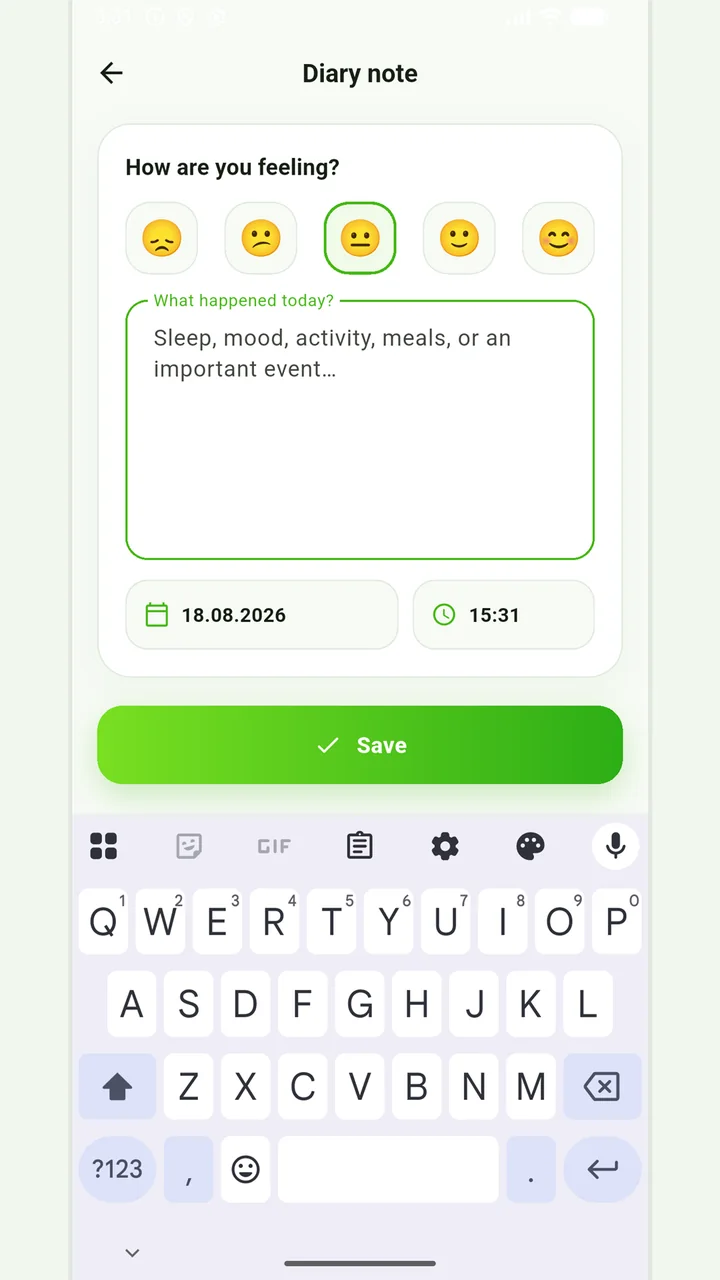
Wellbeing and notes
Mood, a personal rating and free-text context for the selected day.
A conclusion without rushing
A short daily note works better than a long report that is difficult to maintain. A scale, one observation and an important event of the day are enough.
For a final review, go back to the last step: assign just one small action for the next week. Compare it to the original target and specifically note exceptions that cannot be explained by the available records.
The article and appendix do not determine the cause of symptoms. If your illness is severe, unusual, or worsening, seek medical attention regardless of your diary entries.
Full medical disclaimerBrief conclusion
A short review turns accumulated records into one actionable conclusion and helps you eliminate metrics that don't provide value. Working minimum to continue: select the same review day. After this, use the remaining points as a testable plan and keep only actual observations.