
Capture near-term reliable times and degrees of certainty, rather than creating accuracy after the fact.
Main idea
A short daily note works better than a long report that is difficult to maintain. A scale, one observation and an important event of the day are enough.
Time helps restore consistency regarding sleep, food, exercise and medications, even when the cause is not yet known. First practical guide for this task: record the beginning immediately if it is safe to do so.
Action plan
- 01
Record the beginning immediately if it is safe to do so.
- 02
If noticed later, please indicate the time range.
- 03
Note duration and repetition.
- 04
Add only relevant events before the episode.
What most often distorts observation?
- Indicate the exact minute by guess.
- Attribute a cause only because the event happened before.
- Wait for the dangerous symptom to recur.
How does this relate to Vesometr
The Vesometr calendar links a note to a date; Inside the text you can indicate the exact or approximate time.
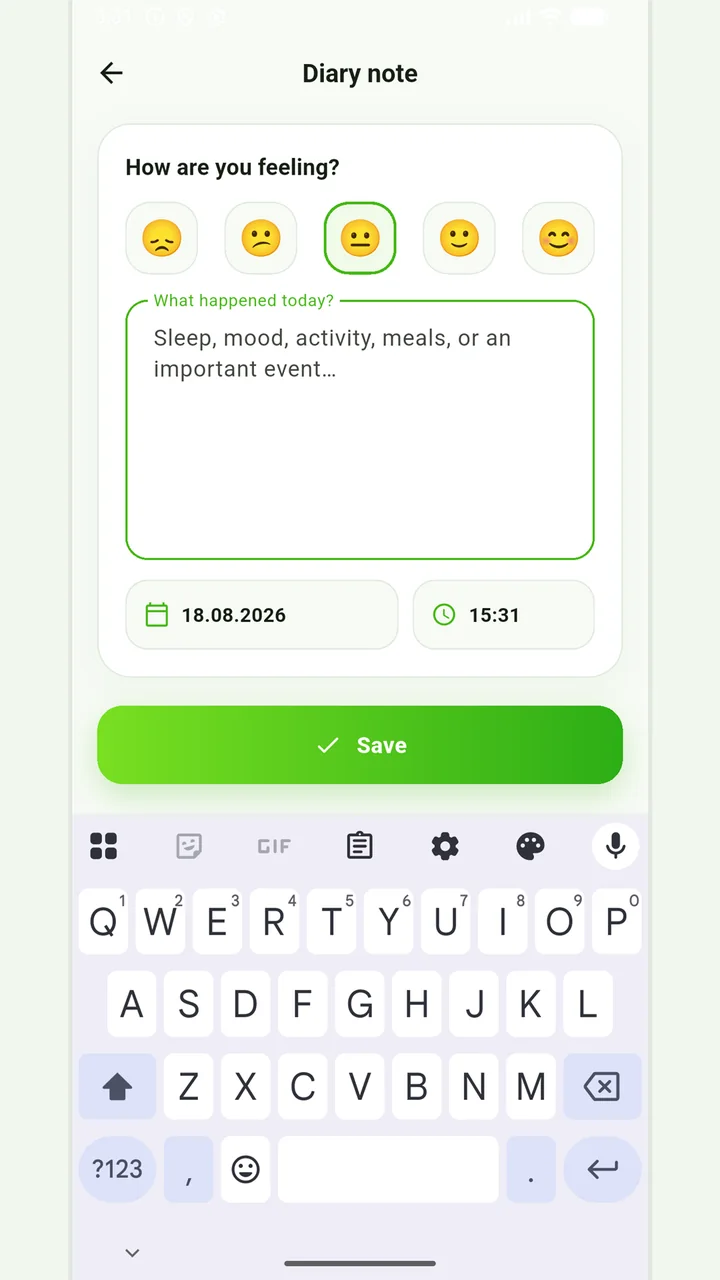
Wellbeing and notes
Mood, a personal rating and free-text context for the selected day.
What to review later
Assessing your well-being is subjective, and that’s normal. Benefit occurs when a person uses the same scale and marks circumstances in the same way.
For a final review, go back to the last step: add only relevant events before the episode. Compare it to the original target and specifically note exceptions that cannot be explained by the available records.
The article and appendix do not determine the cause of symptoms. If your illness is severe, unusual, or worsening, seek medical attention regardless of your diary entries.
Full medical disclaimerBrief conclusion
Time helps restore consistency regarding sleep, food, exercise and medications, even when the cause is not yet known. Working minimum to continue: record the beginning immediately if it is safe to do so. After this, use the remaining points as a testable plan and keep only actual observations.